AARENA APPLICATION
The web.
Structure, gameplay and native browser behavior remain in the application.
HTMLCSSJavaScriptGame state
- HTML structure
- CSS and visual identity
- JavaScript game logic
- Player and enemy state
- Spawning and scoring
- Game rules

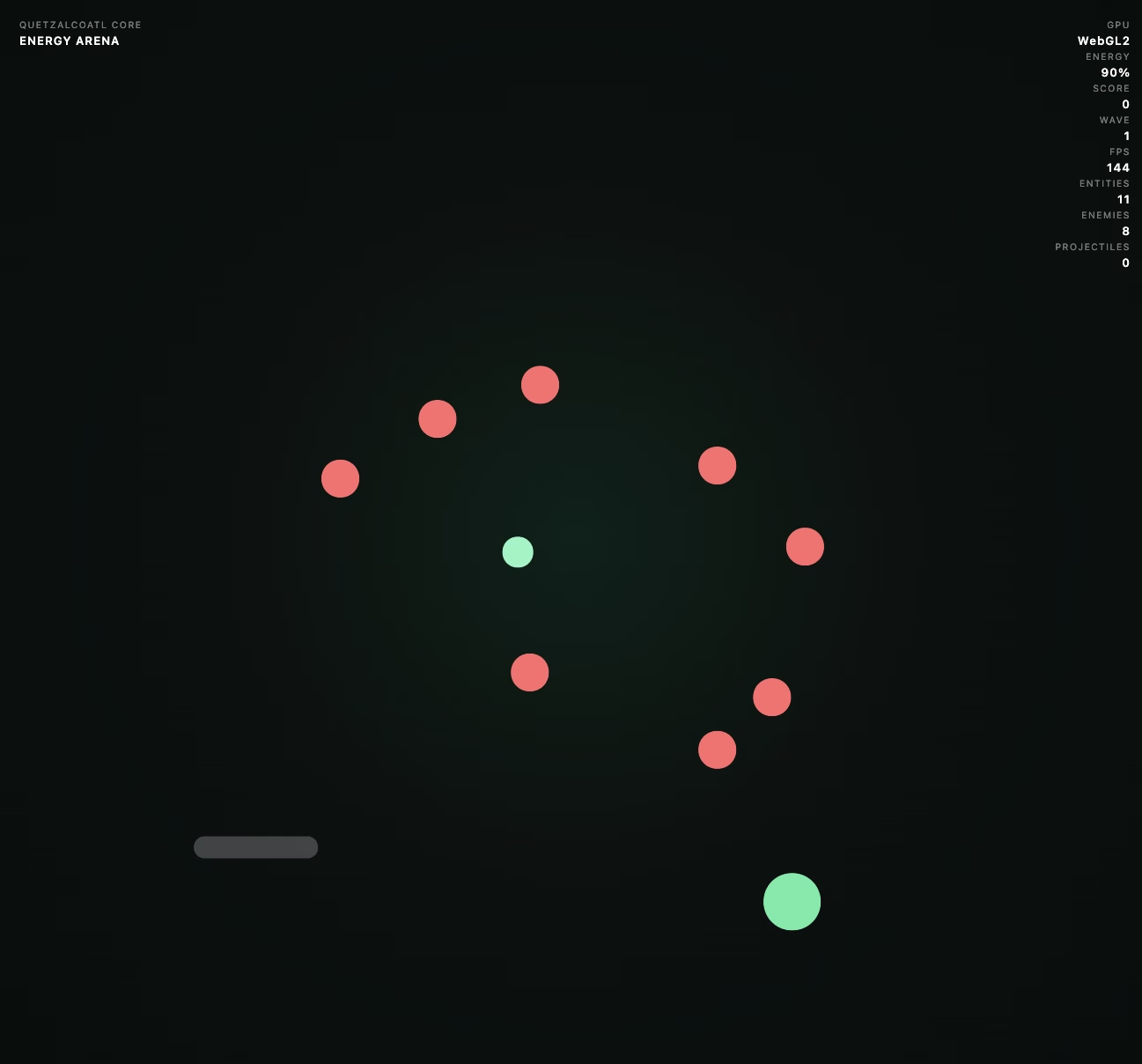
A real browser experiment designed to expose the boundary between a normal web application and the Quetzalcoatl runtime.
The Arena does not contain its own WebGL rendering engine.
It does not manually project DOM geometry into GPU space, resolve energetic relationships or manage Crystal.
The application describes the web. Quetzalcoatl maintains the Universe.
Structure, gameplay and native browser behavior remain in the application.
Nahuales carry energetic and relational state. Rays perturb that state and the runtime resolves the response.
Inspect the Arena source code. The application owns the game. It does not implement the Quetzalcoatl runtime.
It runs through the GPU — without application-level <canvas> setup, WebGL scene code or manual DOM-to-GPU projection.
The Arena handles HTML, CSS and game logic.
Quetzalcoatl adds the Universe.